
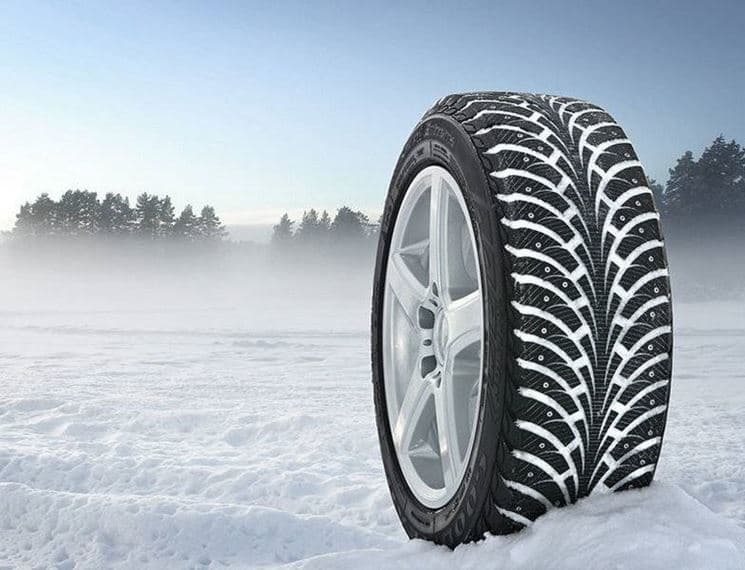
A winter tyre is a tyre manufactured with a special compound based on silica and natural rubber that stays elastic below 7 °C, delivering grip on snow, ice, and cold wet tarmac. It is identified by the 3PMSF symbol (three-peak mountain with snowflake) moulded into the sidewall, which certifies the tyre has passed snow braking tests under ECE Regulation R117.
In brief
- Fit winter tyres when temperatures consistently drop below 7 °C
- The 3PMSF symbol is the only true winter certification; M+S alone is not enough
- In Italy the obligation runs from 15 November to 15 April
- Replace them when tread is below 4 mm or after 6–8 years
Contents
- When to fit winter tyres
- Reading the markings: M+S vs 3PMSF
- Winter vs All-Season: when to choose which
- Tread depth and replacement
- The most reliable brands in 2026
- How much do they cost
- FAQ
- Normative sources
When to fit winter tyres
The tyre rule of thumb is simple: below 7 °C, the winter compound is safer, even on dry tarmac. Below that threshold a summer tyre's rubber stiffens and braking distances increase considerably.
In Italy, the obligation to fit winter tyres (or carry snow chains) generally applies from 15 November to 15 April on signposted roads. The legal basis is Art. 6(4)(e) of the Italian Highway Code (D.Lgs. 285/1992) and regional and municipal ordinances. Before any mountain journey, always check road signs and local rules.
| Period | Typical situation | Recommendation | |---|---|---| | October–November | Variable temperatures, first frosts | Fit winter tyres | | December–March | Full winter | Mandatory on many roads | | April | Early spring | Remove winter tyres once nights stop freezing | | May–September | Summer | Switch back to summer (or keep all-season 3PMSF) |
Reading the markings: M+S vs 3PMSF
The tyre sidewall carries key information:
- 205/55 R16 → width (mm) / aspect ratio (%) / R = radial / rim diameter (inches)
- M+S → Mud and Snow: compound for mud and light snow, but does not certify minimum performance
- 3PMSF symbol → Three-peak mountain with snowflake: certified winter approval, ECE R117 tests passed
- 91H → load index (91 = 615 kg) and speed rating (H = max 210 km/h)
M+S vs 3PMSF: what is the real difference?
| Feature | M+S | 3PMSF | |---|---|---| | Snow performance test | No | Yes (ECE R117) | | Recognised as legal "winter" tyre in EU | Depends on country | Yes | | Suitable for compacted snow and ice | Partially | Yes | | Available on all-season tyres | Yes | Yes (if certified) |
Important: under EU Regulation 2020/740 on tyre labelling, M+S alone does not guarantee certified winter performance. On Italian roads with a mandatory winter tyre requirement, 3PMSF is the applicable standard.
Winter vs All-Season: when to choose which
| | Winter tyres | All-Season 3PMSF | |---|---|---| | Ideal operating temperature | Below 7 °C | 0 °C to 30 °C | | Fresh and compacted snow | Excellent | Good | | Ice | Excellent | Adequate | | Hot summer tarmac | Not recommended | Good | | Average lifespan | 35,000–50,000 km | 40,000–60,000 km | | Cost (counting 2 sets: winter + summer) | Higher (two sets) | Lower (one set) |
Choose dedicated winter tyres if your area sees regular snow and ice, if you drive in the mountains frequently, or if you want maximum safety in extreme conditions.
Choose all-season 3PMSF if you live in a mild-winter area, cover few kilometres per year, or want to avoid the seasonal tyre swap. Always verify the 3PMSF mark — M+S alone is not sufficient.
You can find both winter tyres and all-season tyres in our catalogue, with free delivery and cash-on-delivery available across Italy.
Tread depth and replacement
Tread depth is the single most important parameter for safety on snow.
| Tread depth | Snow performance | Action | |---|---|---| | > 6 mm | Excellent | Still good | | 4–6 mm | Good | Monitor | | < 4 mm | Significantly reduced | Replace | | < 1.6 mm | Illegal | Replace immediately |
Watch the age: the winter compound hardens over time. After 6–8 years from the production year (visible in the DOT code moulded into the sidewall), performance degrades even with adequate tread remaining. The DOT code shows week and year of manufacture: e.g. DOT 1224 = 12th week of 2024.
The most reliable brands in 2026
Annual comparative tests by ADAC (Germany), TCS (Switzerland), and Altroconsumo (Italy) consistently rank these as the best for 2026:
| Brand | Model | Strength | |---|---|---| | Michelin | Alpin 6 | Wet braking and noise | | Continental | WinterContact TS 870 | Ice braking distance | | Bridgestone | Blizzak LM005 | Fresh snow traction | | Pirelli | Cinturato Winter 2 | All-round balance | | Goodyear | UltraGrip Performance Gen-1 | Fuel efficiency | | Falken | Eurowinter HS01 | Best value for money | | Hankook | i*cept RS3 (W462) | Mid-range top performer |
All available in our winter tyre catalogue.
How much do they cost
Price varies by brand and size. For a common size such as 205/55 R16:
| Tier | Price per tyre | Examples | |---|---|---| | Premium | €100–160 | Michelin, Continental, Bridgestone | | Mid-range | €60–90 | Falken, Hankook, Nokian | | Budget | €40–60 | Nexen, Sailun, others |
Remember to budget for fitting and balancing (€15–25 per tyre at a local garage). On PrezzoGomme delivery is always free, with delivery in 24–72 working hours.